Thursday, February 21, 2013

Authentic Mexican Food

I can say with confidence that nothing I ate my entire time in Mexico remotely resembled the food served in Americanized Mexican restaurants back home. It's amazing how basic staples like cornflour, beans, meat, and a few common vegetables can be made into an infinite number of dishes. Although I wasn't sure at first, I've been fully converted that Mexican food just might be one of the best in the world. I thought I'd share a few of the more memorable dishes that I had the pleasure of trying during my time there.


Tostadas with the simple toppings of refried beans,
lettuce, and fresh green salsa. I had these almost every
morning for breakfast. 

Filet of fish Veracruz style with a red chili sauce and carmelized
onions and bell peppers. Served  with a side of plantains.

Sopes are like fluffy tortillas stuffed with refried beans and
topped with chicken, cheese, avocado, tomatoes, and
pickled onions.

Mexican-style pulled pork sandwich with plenty of
hot sauce and fresh lime.


Memelitas are cheap and found just about everywhere. Here
they are half green salsa, half red and topped with chicken
and a crumbled white cheese.

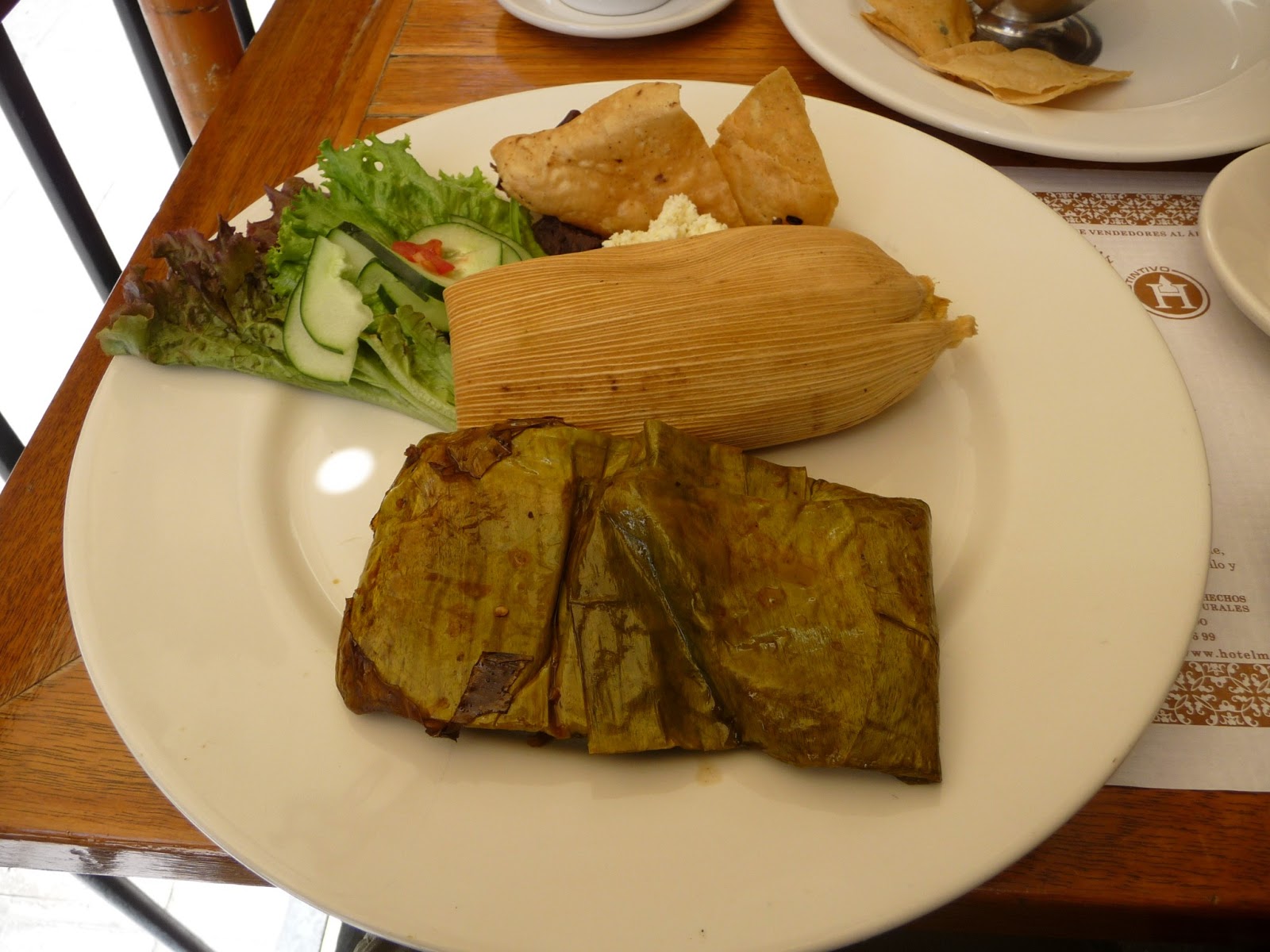
Tamales come in an array of amazing flavors. Here there is a
traditional chicken tamale in a corn husk and another filled
with dark Oaxacan mole sauce and steamed in a banana leaf.

Chilaquiles, a traditional breakfast made from leftover tortillas
fried up  and then smothered with chicken,  onions, and cheese.

Wednesday, February 6, 2013

The Amazing Yucatan Peninsula

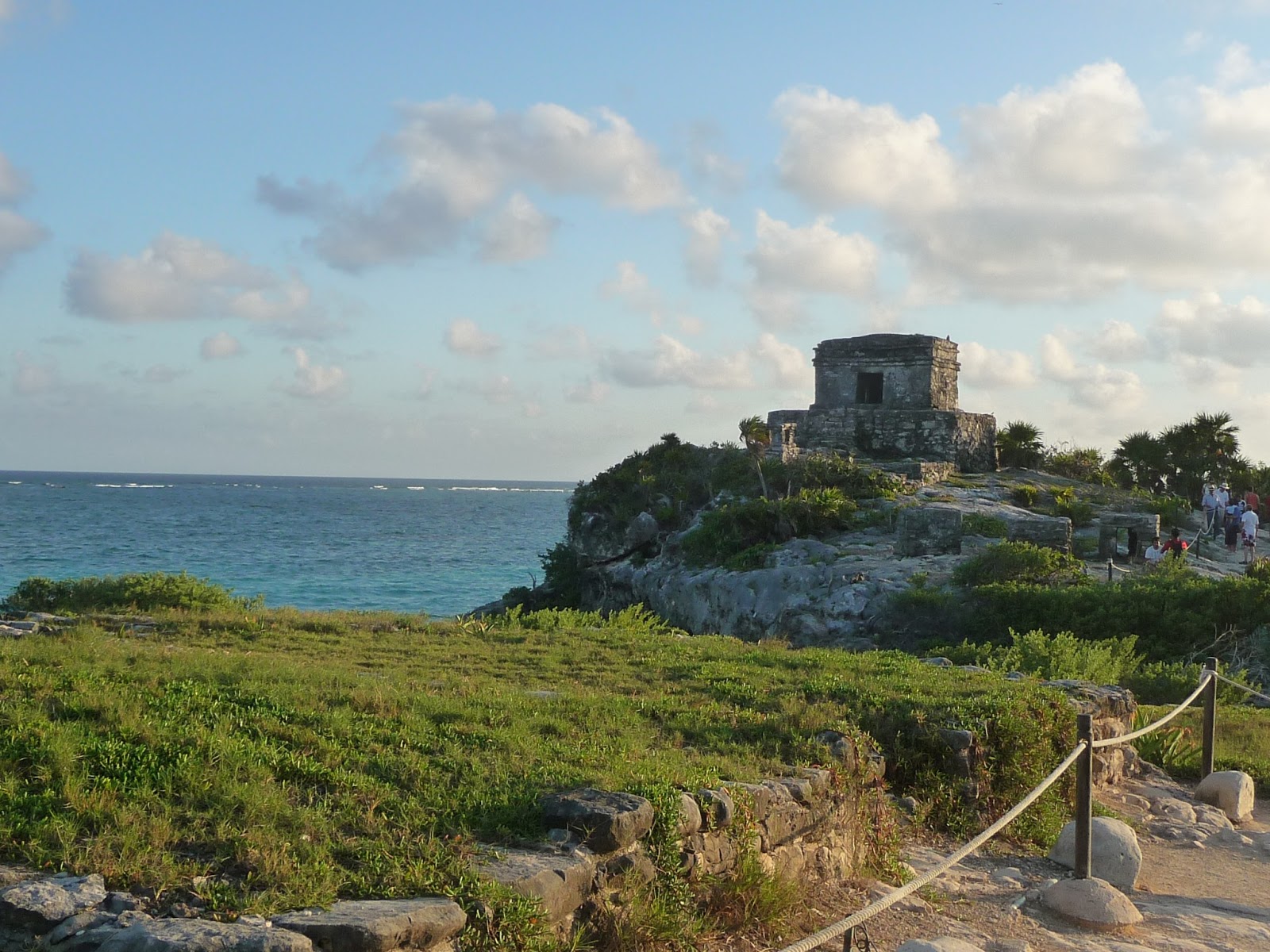
The ruins at Tulum have the Caribbean as a stunning backdrop.

How much better can it get than sipping cold beer on a Caribbean beach with pure white sand and waves crashing 10 feet away? I recommend this area to anyone wanting a tropical vacation on the beach mixed in with a little bit of archaeological exploration. I spent two weeks touring the three states on the Yucatan Peninsula and seeing some of the best beaches and ruins of my life.


Main cathedral in Merida. Construction was started in 1562.

Merida

The Capitol of the state of Yucatan, this vibrant city has the second oldest Spanish cathedral built on mainland America. It's main plaza in the heart of the old city is always bustling with indigenous street vendors selling local textiles as well as families and couples milling around. Most of the colonial architecture has survived even if it is a bit run down and houses a large number of museums, art galleries, and local art cooperatives. 


Celestun

This quiet fishing village fills up with locals looking for a fun day at the beach, but also draws in thousands of tourists a year to see the several groups of local flamingos in the Ría Celestún Biosphere Reserve. We took a boat tour out to the mangroves to see the birds, which are quite shy and were varying shades of pink. Apparently they get their unique color from the beta carotene in the shrimp they eat.  


Campeche

The main plaza in Campeche often hosts live music and festivities. 
This was by far my favorite city on the trip. Seated right on the ocean, this old colonial town isn't famous for it's beaches, but rather draws in tourists interested in history.  Being named a UNESCO World Heritage Site means that all of the old architecture has to be maintained and the buildings are all given fresh coats of paint on a regular basis, making a stroll down the streets feel like a step back in time. The most unique feature here is the old city walls that guard the city from many pirate attacks. Although they aren't fully intact, the sheer scale of them gives the impression of how severe the threat of plunder must have been for those who lived there.


Edzna
Standing in front of the main acropolis.

This was my first exposure to Mayan ruins and possibly one of the most memorable. A remote and little-known ruin that has impressively preserved temples and still allows you to climb most of the structures, Edzna, is difficult to reach as we found while we were navigating back roads winding through the hillside, but well worth it. It's a large site with only a handful of tourists and a range of architectural styles that contrast with the unique five-tier design of the main acropolis. 


                                                             Lol-Tun and Cenotes

Black hands placed here signify this was a sacred place for
communing with the underworld.


The Yucatan Peninsula has no topical rivers. Instead, its limstone bedrock is full of underground rivers that hold crystal clear cold water. Access points or pools of water linked to the surface are called cenotes and almost all major mayan sites have a cenote linked to them, which makes sense in such a dry area. Many of these cenotes have been opened to the public and you are allowed to swim in them. We had a chance to drop by a subterranean cenote, which was small, but lovely.


Later on, we stopped by the Lol-Tun Caves, where we were guided through the largest cave network on the peninsula. The history of humans in the cave dates back to prehistoric times where it was used for shelter and water collection. Much later on the same cave system was used by the Mayan slaves as a hideout from the Spanish hacienda owners.


"El Castillo", the main pyramid in Chitzen Itza hots the famous serpent 
shadow during the spring and fall equinox.


Chichen Itza and Uxmal


These two UNESCO World Heritage sites are the most visited Mayan ruins in Mexico with over a million visitors to Chitzen Itza alone each year. Not only are they easily accessible, but they are also incredibly well-preserved.

Chitzen Itza received decades of extensive reparation from international archaeologists, resulting in a better glimpse of how the structures and city itself would have looked when it was inhabited. One of the most famous symbols of this                                                                                            
The Magician's Pyramin in Uxmal is famous for its 
unique circular construction.


site is the God "Chac Mool" who is lying on his back with a bowl resting on his stomach, waiting for human heads from sacrificial ceremonies. There are many other depictions of human sacrifice, including the famous ball court where the losers are shown losing their heads in a spray of blood.  

                        
Uxmal is less restored, but is set in a lush jungle and has a unique style of architecture. The stones here have a pink hue and the whole area has a strangely remote feeling despite the fact that you're surrounded by throngs of tourists.


Tulum

Although the main draw here is ruins placed on jagged cliffs above the sea, this town also has the best beaches I’ve seen so far in Mexico. The sand sparkles white and the clarity of the water makes it easy to spot schools of fish. There is a small reef a few hundred meters offshore where you can take an hour-long  snorkeling tour to see the coral and although it's not the best reef on the peninsula, it's well worth a stop if you're there a few days. There are also a number of excellent restaurants and a fun raggae bar in town.              


Monday, January 14, 2013

Goodbye to My Students


It’s hard for me to believe that 4 months have passed by so quickly, but my time in Tehuacan has come to an end and I’m sad at the thought of leaving all of my students, whom I will likely never see again. -Teaching young students has been challenging and thought-provoking for me. Although I spent a significant amount of time frustrated I feel that I have grown as a teacher and have a better idea of how to correct my mistakes the next time around. 

Here are a few of my favorite shots of our time together


. 

Saturday, December 15, 2012

Dia de los Muertos


Day of the Dead is a tradition unique to Mexico, which I have wanted to see since I first started learning Spanish when I was 14. A decade later and I finally got to experience this amazing custom firsthand. The roots come from a mixture of Spanish and indigenous Mexican culture. It seems that different cultures across Mexico held traditions honoring their dead during late summer until the Spaniards decided to combine the local holiday with their All Soul’s Day on Nov 2nd. The Spanish holiday was meant to pray for the souls in purgatory, but after being combined with the local celebrations it has become the one day of the year when locals believe that souls of the dead are able to return to the land of the living.


An offering by the middle schoolers to honor a
tennis instructor who had recently died.


The math and science teacher from the middle school offered to take us to a village, Chilac, just outside of Tehuacan which is famous for maintaining the authentic indigenous traditions. In Tehuacan most people will visit the cemetery on November 2n, leave some flowers, and then go home. However, in Chilac most people arrive on the night of the 1st to clean and decorate the graves and then spend the night in the cemetery sleeping, eating, praying, and laughing.

I expected the celebrations to be somber and respectful, but was surprised and happy to find that everyone was smiling and joking. It felt more like entering a carnival than a cemetery with vendors selling food, mariachi bands playing, and whole families gathering to eat a meal together. 


1.       Doing laundry by hand always takes longer than you think.
2.       If the waiter tells you something isn’t spicy, don’t believe him
3.       The spicier the food, the worse my hiccups.
4.       Chili salt lime seasoning may just be the most genius invention ever.
5.       Always be prepared for the gas to run out when you plan a dinner party.

Sunday, October 28, 2012


Oaxaca
Finally a weekend trip to somewhere new. One of my students told me she loved to go to a different city every Sunday just for fun and invited me to go along. When she let me choose where we went I knew I had to finally see this amazing city. It’s world famous for its amazing artists and its international community. As an old colonial town it’s full of old churches, cobblestone streets, and museums.

Above the city on the highest hill are the remains of Monte Alban, one of the oldest cities in Mesoamerica and the center of Oaxacan culture from around 100 BC to 500 AD.  There were temples, tombs, carvings, an observatory, and even tunnels through the hills that reached the city below.  It was the perfect day to explore the site and get a good look at the city below.  


My lovely guides for this adventure


Things I learned this week:
1.       It’s ok to spend 2 hours on a meal.
2.       Cars always have the right of way.
3.       You shouldn’t be concerned about canon fire at 2 am
4.       If there’s a river 8-inches deep running down the street, school isn’t cancelled
5.       5-gallons of water really does feel heavy after 3 blocks

Thursday, September 13, 2012

The Apartment

Front View

Just a few words about our humble abode. There are five of us staying in the teacher’s apartment this semester, which is located right downtown just 2 blocks from the main plaza. We’re located between a night club and a church so when the music stops blaring at 4 am on Saturday we have until 8 am when the church hymns start blasting on their amplifier. So, not much sleep expected on the weekends, but the location is great for getting errands done in the afternoons and for walking back and forth to school, which is about 20 minutes away. 

Laundry-line next to the kitchen.

Some definite pluses here include consistent electricity, (mostly) drinkable tap water, and a boiler for hot showers.  On the other hand we’re pretty much doing laundry by hand and we’re vulnerable to all manner of pest invasions since there are so many open spaces for crawling inside. We’re not infested by any means, but waking up at 6 am to find a cockroach in your kitchen is never pleasant.

By far my favorite part of our apartment is our rooftop. Even though our building is only 4 stories tall, it feels like one of the tallest buildings in town. You can see over the town to the hills surrounding us and get a feel for the valley we’re centered in. A great place for a lunchtime nap, a good book, and a nightcap.

Things I learned this week:
1.       Gutters are a luxury
2.       Toilet paper doesn’t go in the toilet
3.       If there’s a river 8-inches deep running down the street, school isn’t cancelled
4.       Always bring a towel
5.       4-months is a long time to wait for good beer

Monday, September 3, 2012


Upon arrival it was all too clear that things in Mexico are a little less organized and much more relaxed . . .

Oh, are you missing a key part of your curriculum for Monday? Don’t worry – I’m sure we’ll have it in a week or two.

Oh no, you’ve locked the door to that classroom and we seem to have lost the key. Don’t worry – I’ll have my husband climb onto the roof and through the window.

Main School Building
On the first day of class the new supervisor and her husband decided to skip town without saying a word. Strange since they had several years of experience in Poland in China, but I guess that Mexico just wasn’t what they expected. It’s taken a while for things to be re-worked, but I think everyone finally has all of their extra classes in place. Right now I’m teaching 27 hours a week and prepping for 2 different levels of students. My first class starts at 8 in the morning and my last class ends at 9 pm. Even with a 4-hour lunch break my day doesn’t seem nearly long enough to get ready for the following day.

Fortunately my classes are quite small. My fifth grade class only has 7 and my biggest class, adults at the end of the day, can get as big as twelve when everyone decides to show up. Compared to when I was in grade school this seems tiny, but the sizes of our classrooms here couldn’t really handle more students. I usually have to borrow a chair or two if someone wanders in late.

As a whole I’m really enjoying teaching here. 4/5 of my classes are sheer joy and the 5th is just going to take some behavior management skills to make my rowdy 6th graders settle down. It’s so strange teaching children since my behavior management skills have been mostly confined to adults up until now, but in the long run I’m sure this will make me a better teacher. If anyone has any suggestions to keep these kids interested or get them in line please let me know.

Things I learned this week:
1.       The mud is always deeper than it looks.
2.       When you step on a cockroach, make sure it doesn’t pop.
3.       Recycling doesn’t exist in Mexico.
4.       No one is immune from Montezuma’s Revenge.
5.       Medicine in Mexico does not come with instructions or warnings. 


One of the four classrooms we share.


Staff Lounge/Technology Center